
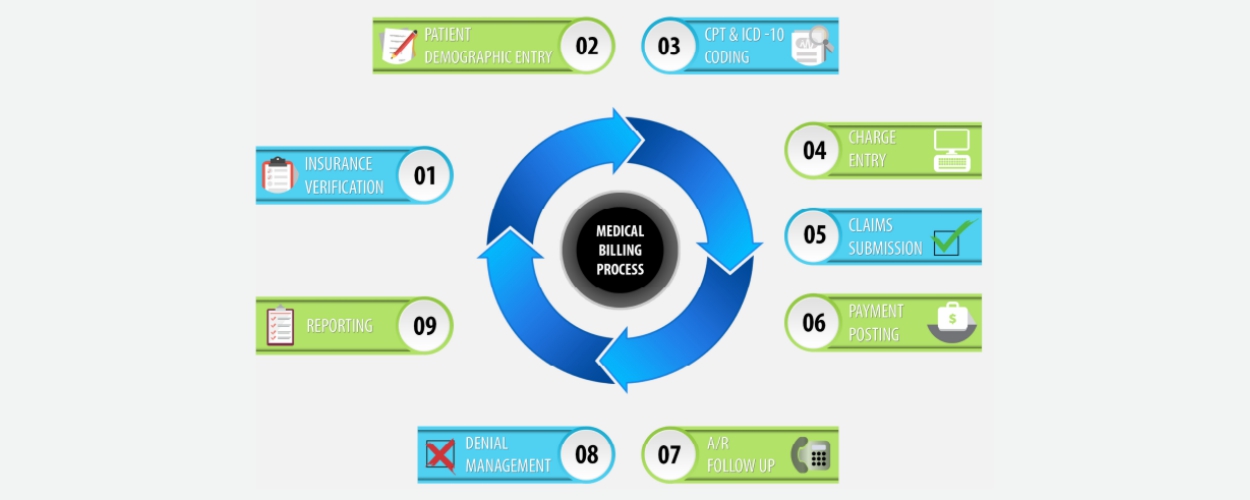
Getting a claim paid starts at the front desk. It is vital that all the necessary information is obtained including copies of insurance cards, driver’s license, or ID. Have your staff verify that the patient filled out your patient registration form completely. The verification of insurance and coverage done before being seen by the Doctor ensures there are no upsets about how much the patient will need to come out of pocket for. You don’t want your patient upset from the beginning!
Data entry
It is recommended that the front desk NOT enter the demographic information into the computer system. They are so busy answering phones, checking-in /checking-out patients etc, that mistakes can easily happen. Just have them enter enough demographic info to make an appointment. The data input into the computer should be done by someone who can focus on the task. Accurate information from the onset will help to make the claim process go smoothly and quickly.
Along with your front desk not entering demographics and insurance info, they should also not post charges for the same reason, distractions. Charge entry should be done in a quiet location. A claim with the smallest amount of inaccurate data will hold up your payment!
Checking out
During check out, collect the copayment at the time of service AND collect any balances due. Good practice management systems print the balance due on the fee ticket. If your system does not do this, your staff needs to be trained to verify if there is a patient balance and to collect when the patient is standing in front of them.
Hold your staff accountable by requiring them to note why a balance was not collected when the patient was in your office.
Financial Agreements
A financial agreement should be signed at the beginning of the patient relationship. A good financial agreement gives you the tools you need to collect patient balances.
Most agreements I have seen are only a couple of sentences and are quite inadequate. Your agreement should include potential collection fees, interest, attorney, and court costs. This way if you have to go after the patient for payment, they are responsible for the additional costs of collecting what they owe. You may also want to include that they agree to pay for after-hours telephone advice, no-show fees, form fees, walk-in fees, returned check fees, and a billing fee if a patient does not pay their copay at the time of service.
There is a lot involved in trying to get your claims paid and getting them paid as quickly as possible. Each piece along the way helps to ensure the timely collection of your money. There is much more you can and should do but ensuring that all of the functions mentioned above get done and done correctly will assist immensely in the successful resolution of the claim.
The money is there, you earned it, now make sure you get it!